When Data Saves Lives: Selfie Deaths and the Power of Heimdllr in Global Surveillance
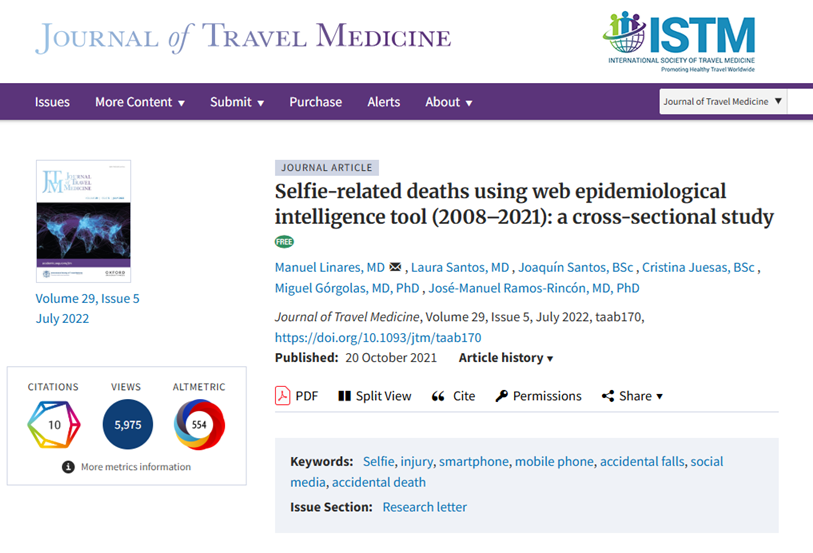
In 2022, Fundación iO published a groundbreaking study in the Journal of Travel Medicine analyzing over 400 selfie-related deaths worldwide between 2008 and 2021. What made this global study possible wasn’t just manual research—it was Heimdllr, our advanced epidemiological intelligence system that now powers H-Radar.
By leveraging automated data mining, machine learning, and real-time surveillance tools, Heimdllr enabled the identification, analysis, and visualization of 292 incidents across 47 countries, transforming scattered information into actionable insight.
Read the full article (Oxford University Press)
What did Heimdllr bring to the study?
- Automatic retrieval of 5,000+ sources in 6 languages
- Topic detection, geolocation, and classification of events
- Supervised and unsupervised algorithms (SVM, Random Forest, Neural Networks)
- Dynamic data visualization using Kibana, ESRI, and custom-built tools
- Ethical protocol and anonymized public data
This was the first scientific evidence of the global magnitude of selfie-related fatalities, especially among young people and travelers. It positioned the issue not only as a social phenomenon, but also as a preventable public health risk.
The Impact: From Data to Global Headlines
The study revealed that travelers accounted for more than 30% of selfie deaths. Most victims were under 30 years old. The leading causes were falls from height, transport accidents, and drowning. India, the United States, and Russia topped the list.
The research sparked global media coverage, from BBC and The Guardian to Reuters and El País, and opened the door to new travel safety recommendations and prevention strategies in public health.
From Heimdllr to H-Radar: Real-Time Intelligence in Action
All the analytical power behind this research is now integrated into H-Radar, our real-time, open-access platform for global health alert tracking. It is driven by Heimdllr and supported by a multidisciplinary network of professionals and citizen scientists.
H-Radar doesn’t just monitor epidemics—it detects weak signals, behavioral patterns, and hidden risks that could impact global health. Just like this study, it turns fragmented data into early warning.
Want to collaborate or learn more?
Email us at info@fundacionio.com
Visit www.hradar.com